 Ethan BrooksVIEW PROFILE →
The American space industry breaks records in 2026 as launches surge and humans return to the Moon
The United States space sector is entering a historic phase in 2026, with orbital launches expected to surpass 300 for the year, NASA sending astronauts around the Moon for the first time in decades, and SpaceX reaching record launch rates while deepening its role in commercial and national security
The United States space industry is entering one of the most remarkable periods in its history during 2026. A combination of soaring launch rates, an ambitious return of astronauts to the Moon and the growing dominance of private companies is transforming the sector at an extraordinary pace. What was once the exclusive domain of government agencies has become a dynamic arena driven increasingly by commercial ambition and record breaking activity.
A record breaking year for launches
The scale of activity in 2026 is unprecedented. The country is expected to see more than 300 orbital launches over the course of the year, a substantial increase from the roughly 230 launches recorded in 2025. This surge reflects the rapidly expanding demand for access to space from commercial satellite operators, government agencies and national security programs alike, all competing for a place on the launch manifest.
Florida's Space Coast has been at the center of this boom. The region closed out 2025 with a record 109 rocket launches, and the pace has shown no sign of slowing in 2026. The launch schedule for the year features greater variety in the rockets flying, including the anticipated first launch of SpaceX's Starship vehicle from Florida before the end of the year, a milestone for the region.
Humans return to the Moon
Perhaps the most historic event of the year was the flight of Artemis II. In April 2026, the mission launched on a voyage of nearly ten days around the Moon, marking the first crewed flight of NASA's Orion spacecraft. The crew consisted of astronauts Reid Wiseman, Victor Glover and Christina Koch, along with Canadian astronaut Jeremy Hansen, representing a landmark moment for human spaceflight.
The mission set a new record for human exploration. The astronauts traveled a distance of 252,756 miles from Earth, the greatest distance that humans have ever journeyed in space. Florida Tech professor Dr. Don Platt described the flight as probably the biggest global space activity of 2026 if successful, representing a return of humanity to deep space for the first time since 1972.
SpaceX sets new records
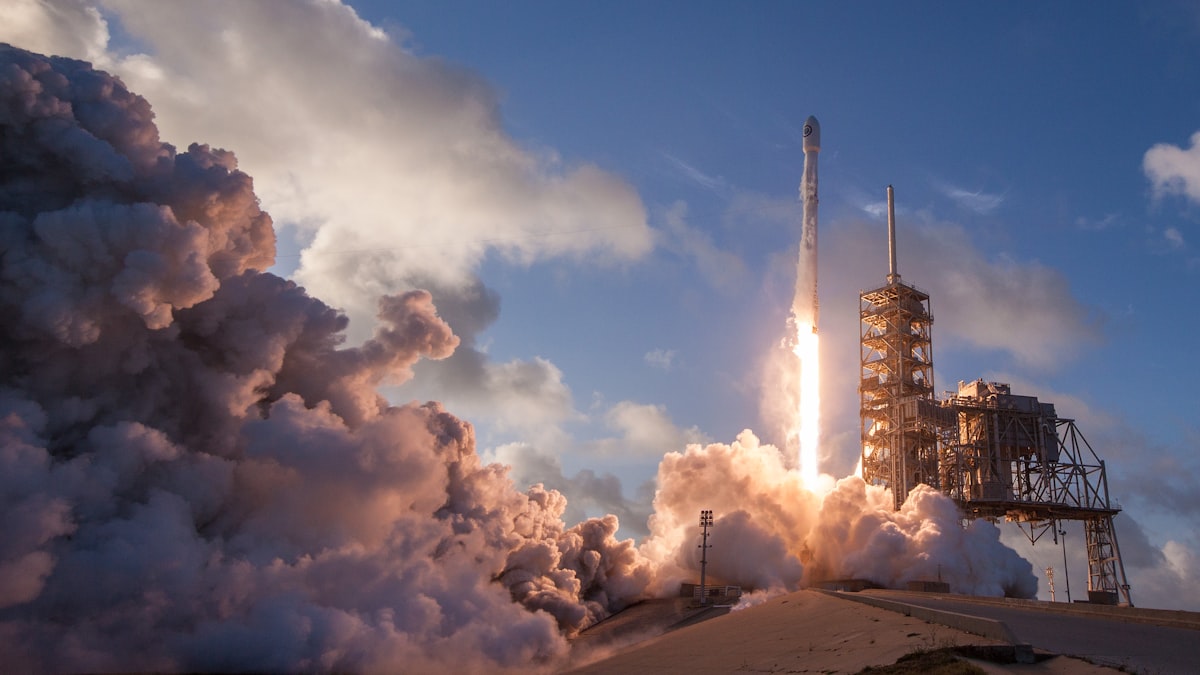
At the heart of the commercial space boom sits SpaceX, which continued to push the boundaries of what is possible. On August 15, 2026, the company launched two Falcon 9 rockets approximately 38.5 minutes apart, setting a new record for the shortest interval between its orbital launches. During these missions, one booster completed its fourteenth flight while another achieved the 650th successful landing of a Falcon booster.
The company also made significant progress with its next generation Starship vehicle. On a flight in late July, Starship released 20 of the next generation Starlink satellites on a suborbital trajectory. A subsequent flight, planned tentatively for the end of August, aimed to attempt the first orbital deployment of these satellites and to catch the upper stage using the mechanical arms of the launch tower.
The expanding Starlink empire
The commercial engine behind much of this activity is Starlink, the company's satellite internet service. Starlink accounted for roughly 60 per cent of SpaceX revenue in 2025, generating approximately 11.4 billion dollars. The service has continued to expand into new markets, beginning to accept orders in Vietnam in August 2026 at a price of around 43 dollars per month, becoming its sixth market in Southeast Asia.
This growth is reflected in the company's overall finances. In the second quarter of 2026, SpaceX revenue reached 7.8 billion dollars, an increase of 92 per cent compared with the same period a year earlier. The dominance of Starlink in the launch schedule is striking, with approximately 79 per cent of Falcon 9 missions in 2026 devoted to deploying the company's own satellites into orbit.
A pillar of national security
Beyond its commercial ventures, SpaceX has become increasingly important to United States national security space operations. On July 29, 2026, the Space Force awarded the company 1.6 billion dollars for 18 Falcon 9 launches through 2027, with missions designed to deploy Pentagon satellites associated with detecting and targeting airborne objects across the globe.
The scale of these government relationships has grown considerably. Over the course of 2026, SpaceX received at least 7 billion dollars in contracts from the Pentagon, underlining how central the company has become to American defense capabilities in space. This deepening role illustrates the blurring of lines between commercial enterprise and strategic national interest in the modern space era.
A crowded and competitive field
While SpaceX commands much of the attention, the broader industry is becoming more competitive. Blue Origin's New Glenn rocket is entering service, and United Launch Alliance is ramping up operations of its Vulcan rocket while transitioning away from the older Atlas V. At the same time, companies such as Vast are preparing to launch privately built space stations into low Earth orbit.
Taken together, the developments of 2026 mark a genuine turning point for the American space industry. With demand so intense that some satellite companies have reportedly been told launch opportunities are booked until 2028 or 2029, and with NASA planning to retire the International Space Station by 2030, the coming years promise to be defined by record activity, fierce competition and a renewed human presence far beyond Earth.