 Ethan BrooksVIEW PROFILE →
America's AI Boom Meets Its Hard Limit: The Power Grid
The United States now consumes nearly 40% of the world's data center electricity, and the AI build-out is straining the grid to breaking point. The binding constraint on AI is no longer chips or capital , it is power.
For the last three years, the story of American artificial intelligence has been told in chips, models and eye-watering valuations. But the most important constraint on the industry's future is turning out to be something far less glamorous and far harder to fix: the electricity needed to keep the machines running.
The scale of the demand is now impossible to ignore. Global data-center electricity consumption nearly doubled in five years to reach roughly 787.8 terawatt-hours in 2025, and the United States alone accounts for close to 40% of that global total, according to recent industry analysis. No other country comes close.
A grid pushed to its limits
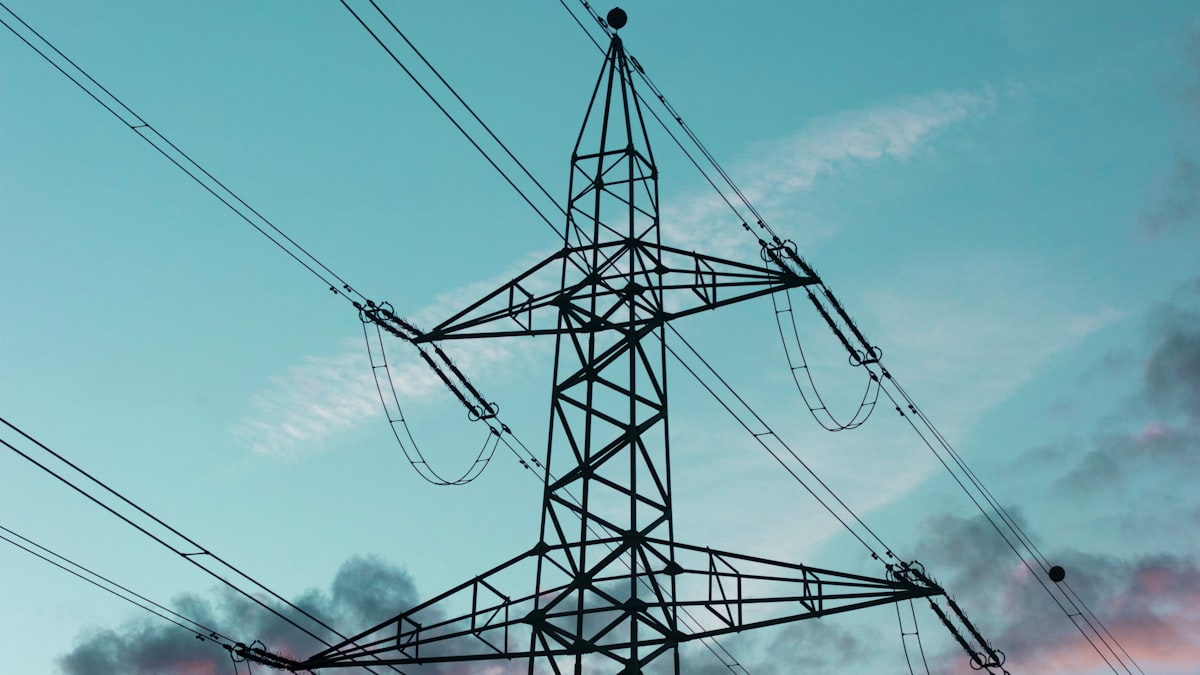
American data centers currently draw around 180 terawatt-hours of electricity a year, but credible forecasts point to that figure climbing to somewhere between 400 and 600 terawatt-hours by 2030. That is not an incremental increase; it is a step change that few regional grids were ever designed to absorb in such a short window.
The pressure is already showing up in hard numbers. Across the PJM Interconnection, the largest grid operator in the country, transmission congestion costs jumped 43% to around 6 billion dollars in just the first half of 2026. Those costs are a direct symptom of a system trying, and increasingly failing, to move enough power to where it is suddenly needed.
Part of the problem is the sheer intensity of modern AI hardware. Racks optimized for training and inference can demand anywhere from 30 kilowatts to more than 100 kilowatts each, compared with the 5 to 15 kilowatts drawn by a traditional server rack. Packing that much power density into a single building overwhelms local substations and transformers that were sized for a different era.
From a capital problem to a power problem
For most of the AI race, the limiting factors were money and access to advanced semiconductors. That calculus has quietly flipped. The primary brake on expansion is now the inability of public electrical grids to deliver sufficient, reliable power fast enough, forcing a strategic rethink across the entire technology industry.
The response has been a pivot toward self-reliance. Rather than wait years for utilities to build new transmission, hyperscalers are increasingly investing directly in dedicated, on-site generation, from gas turbines to solar-plus-storage and even nuclear partnerships. The goal is simple: control your own power supply and stop depending on a congested public grid.
This shift carries real consequences for ordinary ratepayers and for the pace of the energy transition. When a handful of enormous facilities can reshape a region's entire generation plan, questions about who pays for grid upgrades, and whether that new demand is met with clean or fossil power, move from the technical margins to the center of public debate.
A map of concentrated risk
The strain is not evenly spread across the country but concentrated in a handful of hotspots. Projections from the Electric Power Research Institute suggest that data centers could account for between 41% and 59% of Virginia's entire electricity use by 2030, an extraordinary share for a single state to shoulder.
Virginia is only the leading edge of the trend. Seven additional states, including Arizona, Indiana, Iowa, Nebraska, Nevada, Oregon and Wyoming, could each see data centers exceed 20% of their power consumption by the end of the decade, turning a national story into a series of intense local reckonings over land, water and electricity.
None of this means the AI boom is about to stall, but it does reframe what winning looks like. The companies that thrive over the next five years may not be those with the cleverest models alone, but those that solved the unglamorous puzzle of energy first. In the American AI race of 2026, power has become the ultimate competitive advantage.